Color Maze Master: Tap & Clear
MicrochaosCasual
5.0730.00 Reviews
- Version
- 1.2.6
- Installs
- 1.00M
- Age Rating
- Everyone
Screenshots
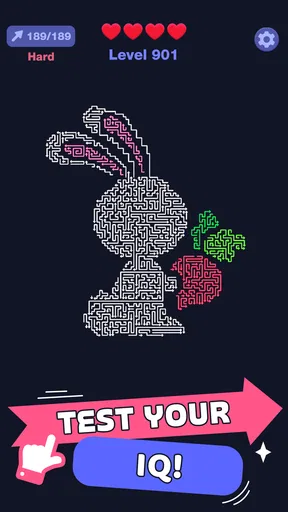
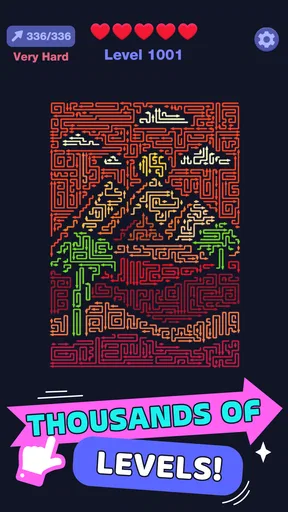
Our Review of Color Maze Master: Tap & Clear
 Analysis by Appyee
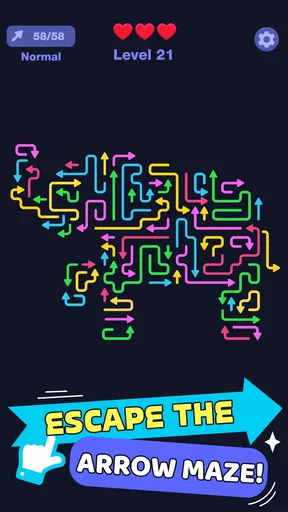
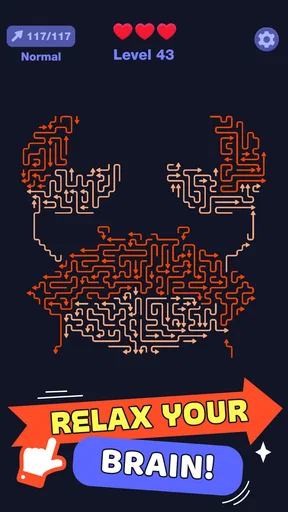
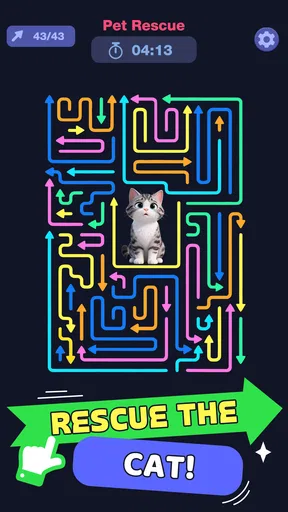
I spent time with Color Maze Master: Tap & Clear as a compact casual puzzle game, and my first impression was easy to understand: it wants to make color-based maze solving feel approachable while still asking me to slow down and think. The basic appeal is not a huge story, a complicated control scheme, or a long list of modes. It is the satisfaction of looking at a crowded visual problem, finding the right path through it, and clearing it with fewer mistakes than I expected.
That makes it a natural fit for short sessions. I can imagine opening it while waiting for an appointment, playing a few puzzles during a commute, or using it as a quiet break between more demanding tasks. It is free to start, rated for Everyone, and works on devices running Android 8.0 or later. Those details matter because the game is easy to approach, but its real value depends on whether the puzzle rhythm keeps giving me a reason to continue after the novelty of the colors wears off.
How the first goals create momentum
The early experience works best when I treat each maze as a small visual exercise rather than as a conventional action game. The goal is immediately readable: understand the color arrangement, identify the route or clearing sequence, and make deliberate taps. I do not need to learn a complicated control language before I can begin. That low entry barrier is one of the strongest choices in the game because it lets the puzzle itself provide the tutorial.
What kept me interested at the start was the feeling that every board presented a contained problem. I was not trying to manage a large map, collect a long list of resources, or remember a plot. I was trying to turn confusion into order. That is a useful early goal for a casual game because it gives each attempt a clear finish line. Even a short session can feel complete when I solve a maze instead of stopping in the middle of an extended level.
The color focus also gives the game a different personality from ordinary number puzzles or match-three alternatives. In a match-three game, I usually scan for immediate combinations and react to opportunities. Here, I find myself checking relationships between colors and paths before tapping. That small change encourages more observation and less automatic swiping. Players who enjoy visual logic should understand the appeal quickly, while people looking for rapid effects may find the opening pace restrained.
My practical advice is to avoid tapping as soon as I see what looks like an obvious move. The first visible route is not always the best one to follow mentally. I get better results by tracing the likely sequence with my eyes, checking what a cleared color might expose, and only then committing. This habit is especially useful on a phone, where a finger can cover part of the maze and make a premature decision harder to correct.
That is also where the game starts to separate itself from a simple color-recognition toy. The challenge is not just noticing a color. It is interpreting the arrangement around it. A player who approaches each board as a quick reaction test may create unnecessary errors, while someone willing to spend a few extra seconds examining the whole layout will usually feel more in control.
What progress feels like during a normal session
The clearest progress signal is the puzzle itself: a board that looked tangled becomes readable, then manageable, then solved. That may sound modest, but it suits a casual title. I do not need a large progression screen to understand that I am improving. I can notice that I am spotting useful routes sooner, hesitating less, and recovering more calmly when a board does not behave as expected.
For me, the best rhythm comes from alternating between confident solutions and puzzles that require a second look. If every board were instantly obvious, the color theme would become decoration. If every board demanded extended concentration, the game would stop feeling casual. The appeal depends on that middle ground, where the game gives me enough success to maintain momentum but still makes the next maze worth examining.
Players wondering whether there is a strong long-term progression system should set their expectations carefully. The verified version is 1.2.6, but I would judge the game primarily by its puzzle-to-puzzle challenge rather than by expecting a role-playing-style campaign. Its progression value comes from solving increasingly demanding visual arrangements and building a better solving routine. That is satisfying for puzzle fans, but it may feel light to anyone who needs characters, equipment, story chapters, or a large collection of unlockable content to stay engaged.
A useful personal workflow is to use two passes. On the first pass, I look only for the broad structure: where the maze seems open, which colors appear connected, and which areas might become accessible after a move. On the second, I choose the tap order. This prevents me from confusing recognition with planning. It also makes the game feel less random because I can usually identify why a move helped or hurt my position.
Another small but important tip is to play with the screen clean and bright enough to distinguish neighboring colors. That is not a hidden feature, but it changes the experience. In a color-dependent puzzle, glare, dimness, or a display with weak contrast can turn a fair challenge into needless frustration. I would also avoid playing when I am rushing, because the game rewards visual patience more than frantic input.
Where the difficulty curve earns its place
The difficulty works when it asks me to reconsider the board rather than simply making the colors harder to see. A good maze puzzle should make the next decision less obvious while keeping the rules understandable, and that is the balance I look for here. The challenge feels appropriate when I can explain my mistake after making it. If I tap the wrong route because I failed to inspect the layout, that is a useful lesson. If the result feels arbitrary, my interest drops quickly.
That distinction matters for different kinds of players. Someone new to logic games can enjoy the early boards because the controls are uncomplicated and the objective is visible. A more experienced puzzle player may move through the first part quickly and then judge the game by how thoughtfully the later arrangements demand planning. I would recommend approaching it as a steady brain break rather than as a punishing expert puzzle collection.
When I get stuck, I do not immediately repeat the same sequence. I reset my attention by looking for the bottleneck: the color or corridor that appears to control access to the rest of the maze. Then I ask what changes if I solve that area first, and what might be blocked if I do. This method is more effective than tapping quickly in the hope that the board will reveal the answer by accident.
The game is also better suited to players who enjoy visual reasoning than to those who want constant novelty in mechanics. Its central idea is focused. That focus gives the puzzles an identifiable identity, but it also creates a limitation: if color mazes do not appeal to you, the presentation alone may not provide enough variety. I would choose a broader puzzle collection instead if I wanted wordplay, physics challenges, spatial rotation, and number logic in the same package.
Screen size can influence the difficulty as well. On a larger phone or tablet, I find it easier to inspect the full maze without my finger hiding important details. On a smaller display, I need to make shorter, more deliberate taps and spend more time reading the board before touching it. The game remains approachable, but the physical size of the device can change how comfortable the planning feels.
Does the game create healthy pressure to continue?
The retention pressure here comes naturally from the desire to solve one more board. That is the kind of pressure I prefer in a casual puzzle game: the unresolved problem stays in my head, and finishing it feels more rewarding than simply accumulating screen time. A short session can end after a successful solution, while a difficult maze can encourage me to return later with a clearer mind.
At the same time, this loop is not equally compelling for everyone. Some players need daily rewards, social competition, dramatic unlocks, or a strong narrative hook. Color Maze Master: Tap & Clear is a weaker choice for those expectations because its main reason to return is the puzzle challenge itself. I would not install it expecting a broad live-service experience. I would install it because I like the quiet tension of working out a visual sequence.
The free entry point lowers the risk of trying it, but the presence of in-app purchases means I would still pay attention to the purchase flow before spending. Items range from $2.99 to $12.98 each. That does not automatically make the game aggressive, yet it is a meaningful consideration for families and for anyone who prefers a completely frictionless free experience. Since the age rating is Everyone, parents may appreciate checking purchase settings on the device before handing the game to a child.
For my own use, I would treat purchases as optional rather than as part of the core reason to play. The game’s strongest loop is already present in examining and clearing mazes. If a player feels pressured to spend simply to enjoy the basic puzzle, that would undermine the calm, thoughtful quality that makes the concept attractive. I would also avoid buying anything during a frustrating streak; a difficult board is exactly when it is easiest to mistake impatience for a genuine need.
One of the more useful ways to keep the experience fresh is to change the purpose of a session. Sometimes I play for relaxation and accept a slower pace. Other times I try to improve my planning by making fewer exploratory taps. This gives the same core mechanic two different uses without pretending that the game has a completely different mode. It is a small mindset change, but it helps prevent the routine from becoming purely repetitive.
Who will enjoy it, and who should choose something else?
I would recommend this game to people who like compact logic challenges, visual organization, and puzzles that can be understood without a long tutorial. It is especially suitable for players who want something calmer than a reflex game but lighter than a large strategy title. The Everyone rating also makes it approachable across age groups, although younger players may still benefit from guidance around in-app purchases and from help distinguishing colors if they find the layouts confusing.
It is a good fit for a short daily routine. For example, I can imagine playing a few boards after lunch instead of opening a social feed. The session has a clear mental task, and stopping after a solved maze feels natural. It can also work as a travel companion when I want an offline-style-feeling puzzle break, although I would not assume any particular connectivity behavior beyond what the platform requires.
I would steer away from it if you want a story-driven adventure, competitive multiplayer, fast reflex action, or a large strategic system. I would also hesitate to recommend it to someone who dislikes color-dependent puzzles or has difficulty separating similar shades on a small screen. In those cases, a word puzzle, number-based brain game, or puzzle title with stronger accessibility controls may be a better choice.
Compared with match-three games, this one asks for more planning and less rapid pattern exploitation. Compared with crossword or word games, it offers a more visual challenge and avoids requiring language knowledge. Compared with large strategy games, it is far easier to start and stop, but it does not provide the same sense of building an empire, managing resources, or shaping a long campaign. Its advantage is focus; its trade-off is a narrower range of activity.
My verdict on the progression and pacing
Microchaos has built a casual game around a clear promise: give me a color maze, let me reason through it, and reward the moment when the structure finally makes sense. The early goals are accessible, the progress signals are easy to read through successful solutions, and the difficulty is most enjoyable when it tests planning rather than luck. The pacing suits short sessions, especially when I want a quiet alternative to more aggressive mobile games.
The main limitation is equally clear. The experience depends heavily on whether I enjoy repeating the central maze-solving idea. Players looking for elaborate unlock trees, narrative milestones, or several radically different activities may find the progression too focused. The purchase range also means I would review any optional spending carefully, particularly on a device shared with children.
Still, the game earns its place as a straightforward brain-training-style pastime without needing to become something larger than it is. A 5.0 average from around 42 thousand ratings and more than 1 million installs suggest that its simple concept has connected with a substantial audience, while the free price makes trying it easy. Those figures are encouraging, but my recommendation is based more on the actual fit: if you enjoy tracing visual problems and prefer thoughtful taps to frantic swipes, this is worth a look.
I would keep Color Maze Master: Tap & Clear installed for those moments when I want a small, self-contained challenge. My best advice is to study the full layout before touching it, identify the likely bottleneck, and treat mistakes as information instead of rushing into another sequence. That approach brings out the game’s strongest quality: the satisfaction of turning a confusing color pattern into a clear plan.
Verdict
Strengths of Color Maze Master: Tap & Clear
- Simple tap controls make it easy to start playing immediately.
- Short levels are ideal for quick breaks or casual sessions.
- Color-based puzzles offer a relaxing alternative to action-heavy games.
- Gradually harder layouts provide a steady sense of progression.
- Works well for players who prefer quiet, low-pressure gameplay.
Limitations of Color Maze Master: Tap & Clear
- Repetitive mechanics may become predictable after extended play.
- Some puzzles can feel more trial-and-error than strategically deep.
- Later levels may be frustrating if color patterns are hard to distinguish.
- The game may offer limited appeal for players seeking fast-paced action.
- Progress can feel slow without frequent rewards or new gameplay elements.
Similar Picks in This Category
View All
My Talking Angela
Outfit7 Limited4.2

My Talking Tom
Outfit7 Limited4.3

Pou
Zakeh4.2

My Talking Tom 2: Pet Game
Outfit7 Limited4.3

Candy Crush Saga
King4.6

Bridge Race
Supersonic Studios LTD4.1
Frequently Asked Questions
What is Color Maze Master: Tap & Clear?
Color Maze Master: Tap & Clear is a casual puzzle game focused on clearing colorful maze-like arrangements through taps. You need to study the layout, identify the correct order of moves, and remove or connect matching elements without getting trapped by blocked paths. Its rules are easy to understand, but later levels require more planning, patience, and careful observation rather than fast reactions.
How do you play Color Maze Master: Tap & Clear?
Gameplay is based mainly on tapping the appropriate colored pieces or paths to clear the board. Before making a move, it is important to check how each piece can travel and whether another object is blocking it. A careless tap can disrupt the solution, so the best approach is to examine the entire maze first, then complete the available moves in a logical sequence.
Is Color Maze Master: Tap & Clear suitable for children and beginners?
Yes, the game is accessible to beginners because it uses simple touch controls and introduces its puzzle concept gradually. Children can generally understand the basic objective quickly, while adults may enjoy the increasingly strategic challenges. However, some stages can become surprisingly difficult, so younger players may need help with planning, recognizing patterns, or deciding which move should be made first.
Does Color Maze Master: Tap & Clear require an internet connection?
The core puzzle experience appears designed for quick, self-contained play, making it suitable for short sessions when you are traveling or have limited connectivity. Nevertheless, internet access may still be needed for advertisements, optional rewards, analytics, updates, or other online features. Availability can vary by device version, so it is best to test the game once offline before relying on it without a connection.
Are there ads, in-app purchases, or privacy considerations?
As with many free-to-play casual puzzle games, Color Maze Master: Tap & Clear may include advertising and could offer optional purchases, such as removing ads, receiving hints, or unlocking additional content. These features are not necessarily required to progress, but they can affect the overall experience. Before downloading, review the current store listing for pricing, permissions, data collection details, and the developer’s privacy policy.
Play our best games!


